
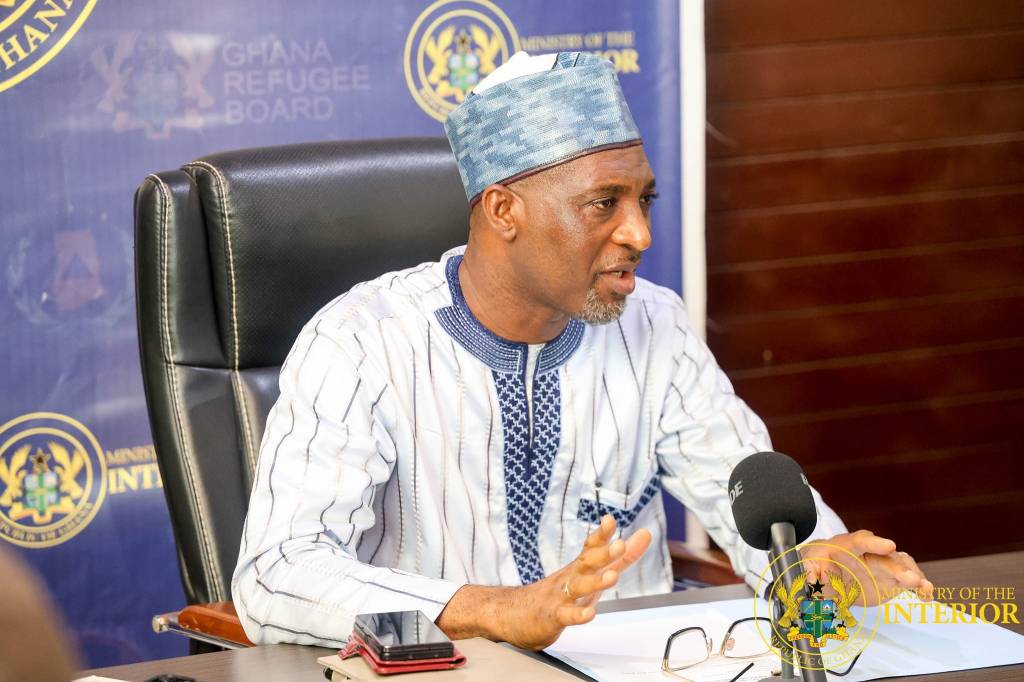
The Minister for the Interior and Member of Parliament (MP) for Asawase, Mohammed Mubarak Muntaka, has disclosed that his Ministry is preparing an Information Paper for Cabinet on the introduction of mandatory drug testing for persons seeking employment in the public sector.
According to him, the proposal is aimed at ensuring that people recruited into the public service are not already dealing with drug-related challenges.
Mr Muntaka said the proposal follows concerns raised during this year’s security services recruitment exercise, in which more than 6,000 applicants were disqualified after medical screening detected drug use and mental health conditions.
“Very soon, the Ministry of the Interior will be taking an Information Paper to Cabinet, and one of the things that we are going to do is to ensure that nobody gets into public service until we do a drug test on you,” he said.
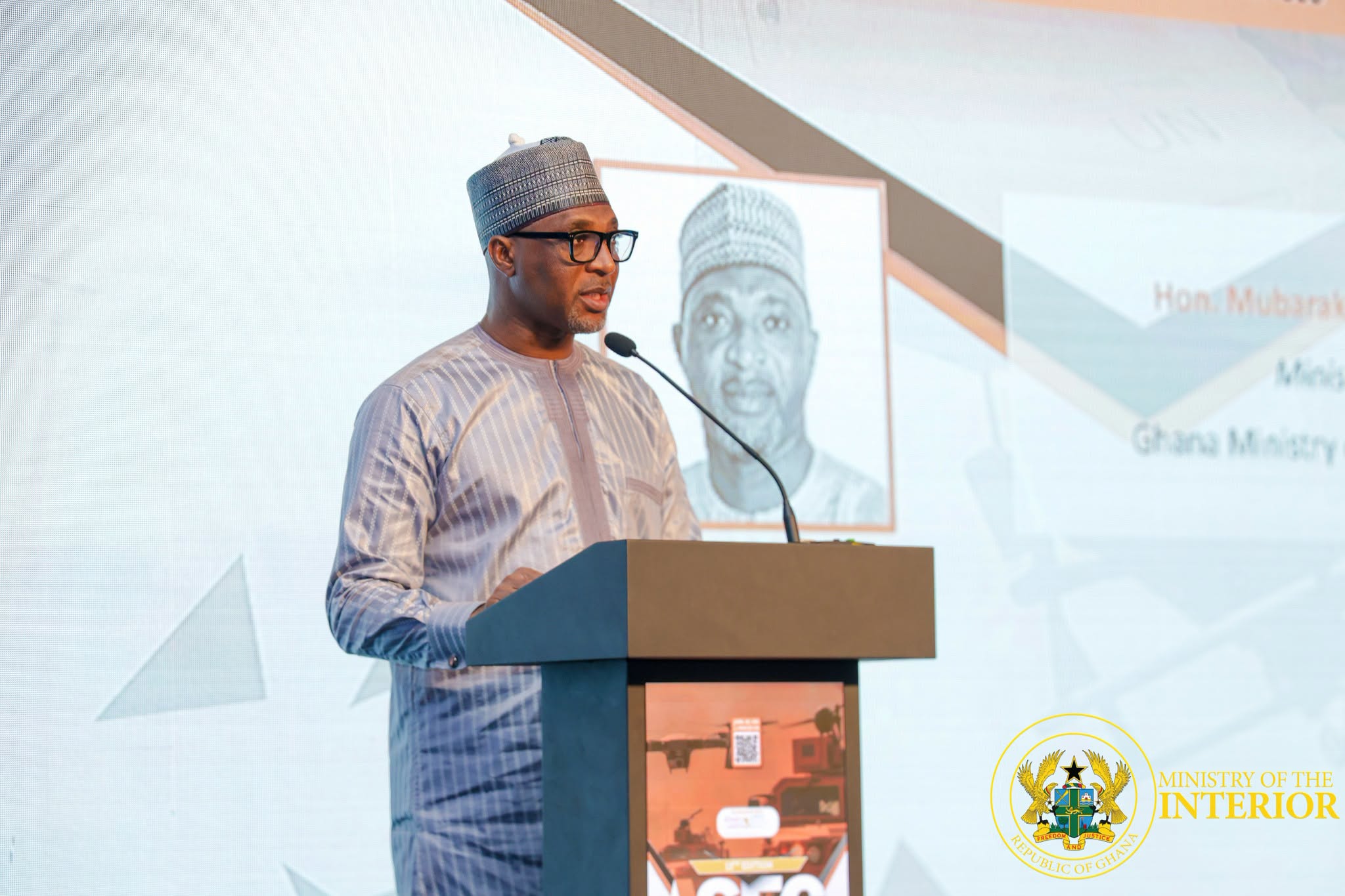
He made the remarks at a ceremony to officially open a newly constructed six-unit first-floor classroom block at Sakafiya Islamic Senior High School.
Mr Muntaka said the recent recruitment exercise had highlighted the need for stronger measures to address drug abuse among prospective public servants.
He said more than 100,000 applicants underwent medical examinations, with drug testing and mental health assessments added to the traditional physical and laboratory examinations.
According to him, more than 4,000 applicants tested positive for drugs, while about 2,000 others were disqualified on mental health grounds.
“It is shocking for us this year’s recruitment exercise. When we decided to test for drugs, over 6,000 people were disqualified because they tested positive for one drug or the other,” he said.
“If we hadn’t done this, many of them would have gotten through into the civil service,” he added.
The Interior Minister also acknowledged that drug abuse is not limited to prospective recruits, saying some personnel already in the security services were dealing with drug-related challenges.
“Some of the officers that we have in the service, some already are into drugs. And we are taking steps to help them to get out of it,” he said.
He stressed that government could not knowingly recruit and train additional personnel who were already abusing drugs.
“We are not going to be allowing new people to be trained when we know you are already on drugs,” Mr Muntaka stated.
Mr Muntaka also expressed concern about the increasing presence of drugs in secondary schools, warning that some students had resorted to selling tramadol and other harmful substances to their colleagues.
He urged headteachers and school authorities to pay closer attention to students and activities that could expose young people to drug abuse.
“Today, in some of our secondary schools, some of the students themselves are hiding to sell tramadol and other harmful drugs to their colleagues,” he said.
“This is why we are calling on the headmaster to pay attention to these students and what they are doing.”
He warned students against peer pressure and claims that substances such as Indian hemp or tramadol could improve academic performance.
“Drugs destroy you forever,” he cautioned.
“What is the use of that exam if by the time you get A-AAAA, you have destroyed yourself?” he asked.
He said drug addiction could be difficult to overcome and could have serious consequences for an individual’s mental health and future prospects.
Mr Muntaka urged students facing poverty and other socioeconomic challenges not to lose hope or turn to drugs.
“Your future is way ahead of you. Your future is much brighter ahead of you,” he told the students.
Muntaka shares personal story
The Interior Minister used his personal experience to encourage the students to remain focused on their education despite financial difficulties.
He recalled growing up as the son of a ‘kooko’ seller and helping his mother sell various items, including bananas, groundnuts and mangoes, on the streets of Kumasi.
“I am a ‘kooko’ [porridge] seller’s son. My mother was selling ‘kooko’ in our home,” he said.
He said he never imagined that he would one day become a Member of Parliament given the circumstances in which he grew up.
“If somebody had told me 40 years ago that one day I could even become a Member of Parliament, I would never have believed it,” he said.
Mr Muntaka also compared his educational journey with that of his first son, who began medical school at 17.
“My first son started medical school when he was 17 years. And the day he entered [university] to start his medicine, I told him, ‘Eman, you are very lucky. You are starting medicine at 17. At 17 years, I was still in primary school,’” he recalled.
He urged students not to allow financial difficulties or the responsibility of supporting their parents to convince them that they had no future.
“Don’t let the challenge of today- because your mother is poor, because when you go home, you have to go and help your parents to do one thing or the other- you think that hope is lost. No. There cannot be lost hope,” he said.
New classroom block
The newly constructed six-unit first-floor classroom block at Sakafiya Islamic Senior High School includes an office and a six-seater water closet facility.
The facility is expected to provide students and teachers with an improved environment for teaching and learning.
Mr Muntaka said investments in educational infrastructure were aimed at equipping young people to become responsible citizens and contribute meaningfully to national development.
“Students, all these things that we are doing, all this investment that we are putting in, it is for you to be better citizens than us,” he said.
He urged the students to make good use of the facilities provided and remain focused on building a positive future for themselves and the country.
Source:Citinewsroom
 Voice that counts
Leave a comment